Abstract:
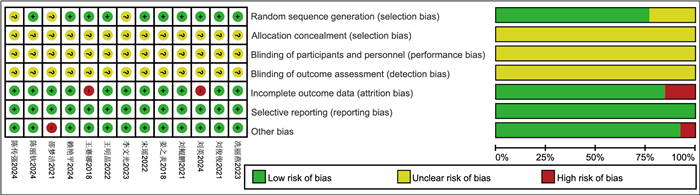
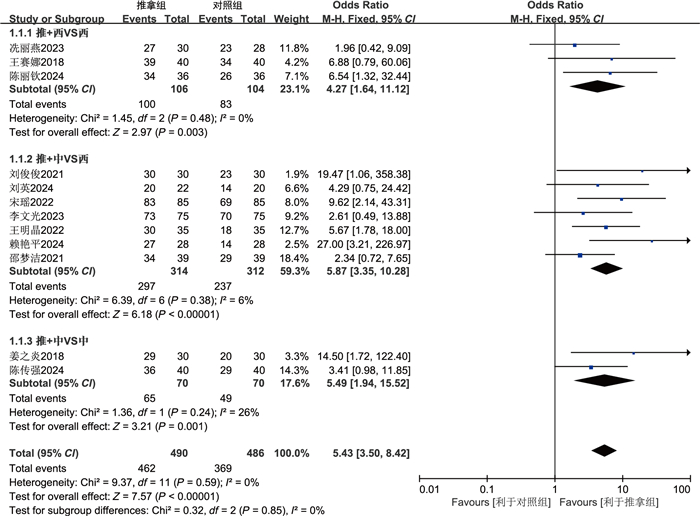
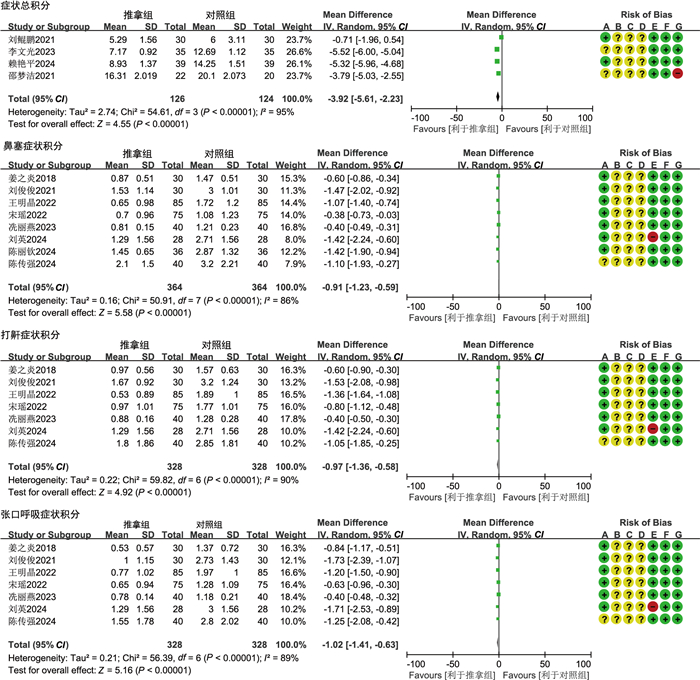
Objective To systematically evaluate the effectiveness of Tuina therapy in treating adenoid hypertrophy in children, provide scientific evidence for guiding the use of Tuina in treating the disease. Methods Randomized controlled trials on Tuina therapy for adenoid hypertrophy in children were retrieved from CNKI, Wanfang, VIP, CBM, PubMed, Cochrane Library, EMbase, and Web of Science databases from their establishment to November, 2024. The language was limited to Chinese and English. Firstly, the literature identified from various databases was analyzed using NoteExpress software to eliminate duplicate documents. Subsequently, two staff members further screened the documents according to the inclusion and exclusion criteria and extracted the research data from the ultimately included studies. The quality and data of the included literature were then subjected to Meta-analysis using the Cochrane system and RevMan 5.3 software. Results A total of 131 relevant articles was obtained. After strict screening, 13 studies involving 1 036 children were included. The meta-analysis results showed that the overall clinical effective rate of the Tuina group was higher (OR=5.43, 95% CI: 3.50-8.42, P < 0.001), the total score of TCM syndromes (MD=-3.92, 95% CI: -5.61 to -2.23, P < 0.001), the score of nasal congestion symptoms (MD=-0.91, 95% CI: -1.23 to -0.59, P < 0.001), the score of snoring symptoms (MD=-0.97, 95% CI: -1.36 to -0.58, P < 0.001), the score of mouth breathing symptoms (MD=-1.02, 95% CI: -1.41 to -0.63, P < 0.001), the A/N value of adenoids (MD=-0.03, 95% CI: -0.06 to -0.00, P=0.03), and the quality of life score (MD=-8.38, 95% CI: -10.00 to -6.77, P < 0.001) were all lower. Conclusion The therapeutic effect of Tuina on children with adenoid hypertrophy is definite and significantly better than that of the control group, which can improve the clinical efficacy. However, due to the limitations of the sample size and quality of the included studies, more large-sample and high-quality clinical studies are still needed to verify its effect in the future.